

Patchbays!
How Jackpot! Recording Studio Interconnects. -by Larry Crane

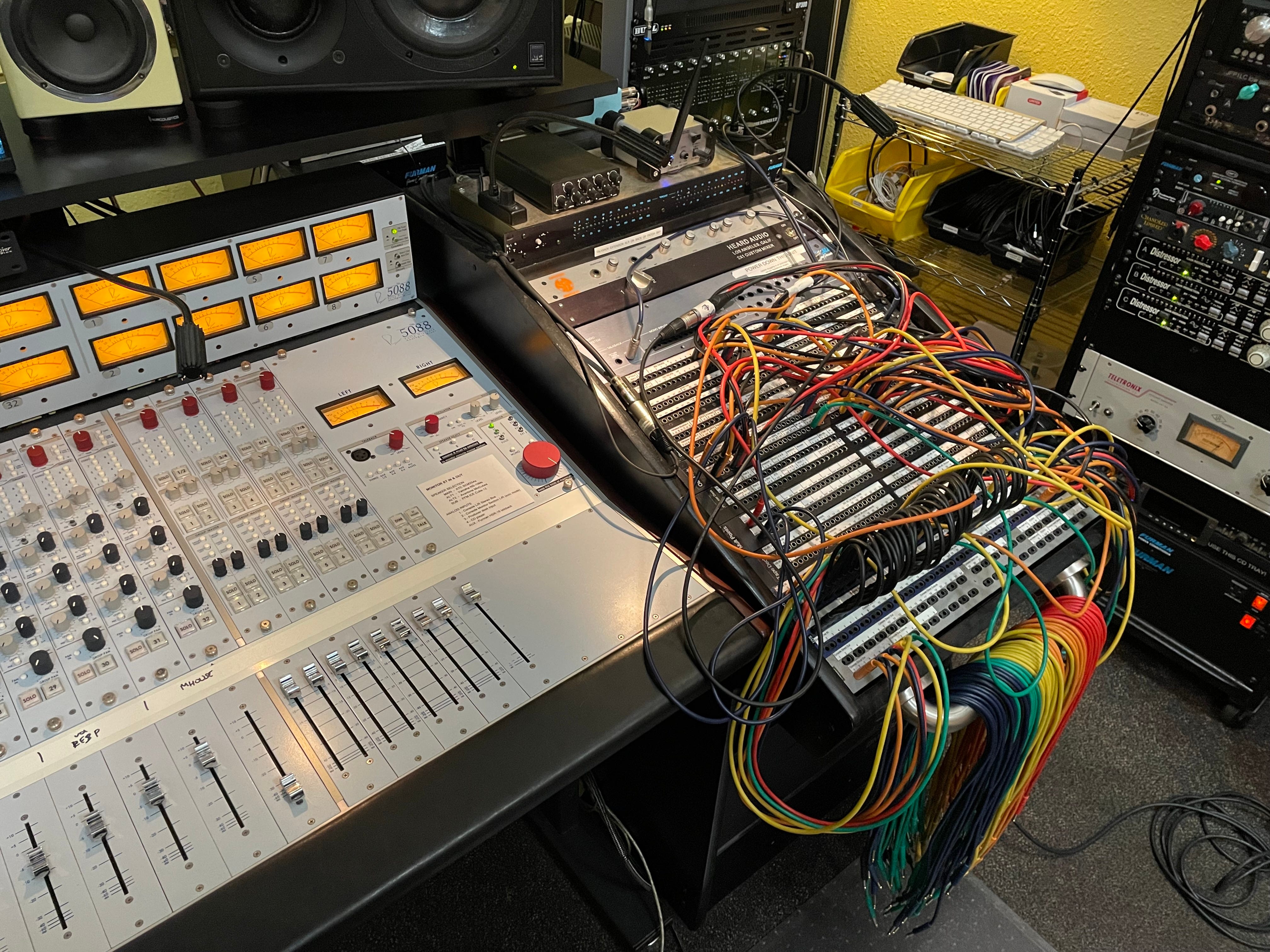
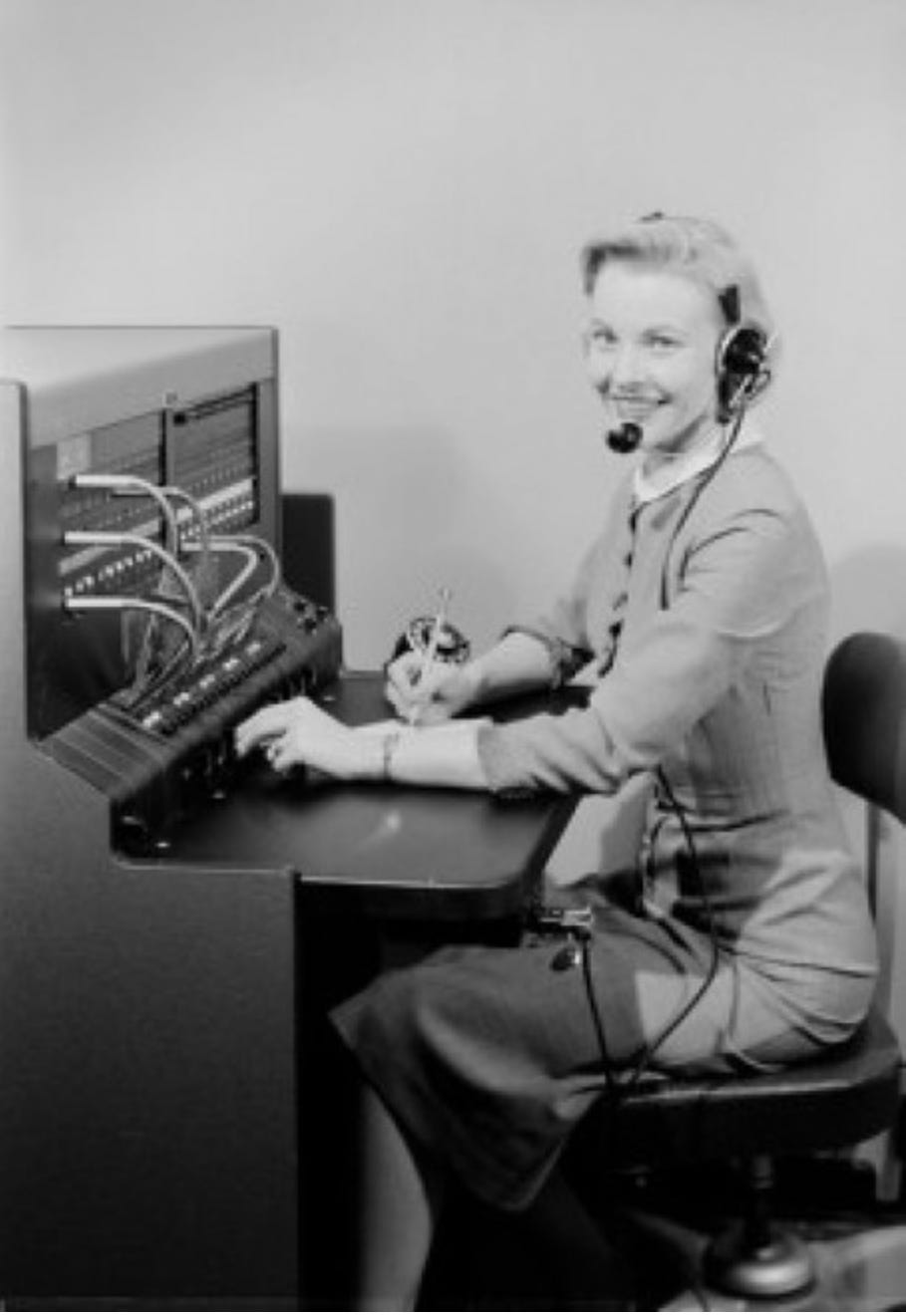
See that thing with the mess of cables to the right of the Rupert Neve Designs mixing console? That’s a patchbay. In old movies and such you’ll sometimes see a telephone operator sitting at a desk, fielding calls, and routing them via jacks and plugs similar to what we see here; these are the telephone switchboards that our studio patchbays are based on. My grandparents ran a motel in the ‘70s that even had one for routing the phone to different rooms!
In fact, the multicolored cables being used on ours are tiny telephone cables, called TT in the studio world. What these cables allow is quick patching between audio devices.
So, if one didn’t install a patchbay what would be the difference? Imagine crawling behind the console, tape deck, racks of outboard gear, and more devices in order to plug anything in. Or how about running 20 cables under the door in order to get microphone signals to the preamps? My tiny pre-Jackpot! home studio, Laundry Rules Recording, had no patchbay. While there was so little gear it almost didn’t matter, I still could have worked faster and more creatively if I had one.
Say you’re recording a vocalist out in our live room. They’ll be singing into a microphone, and that mic enters a custom-made wall panel filled with XLR input jacks.
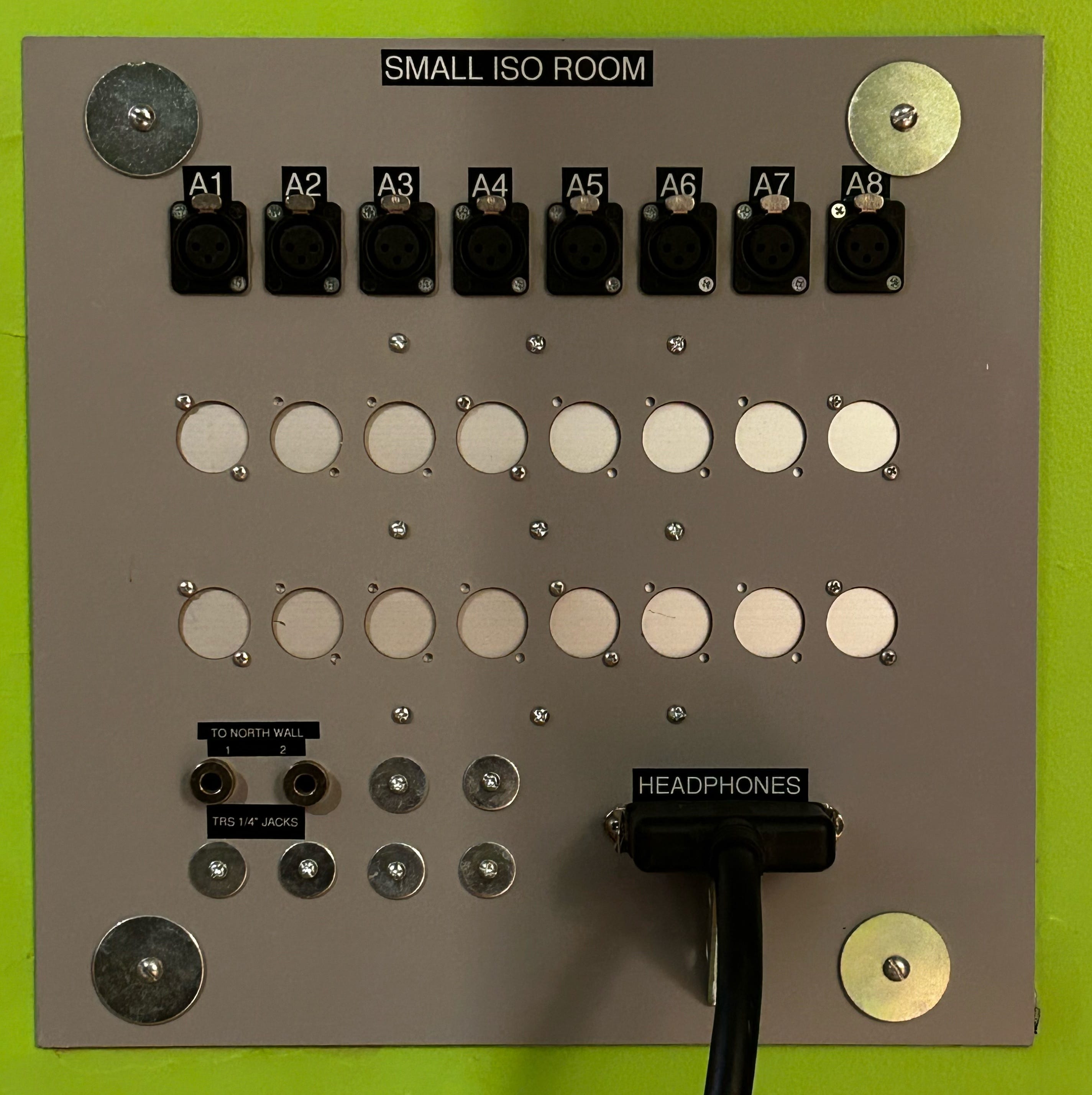
The signal runs via cables through the walls and underground in tubes (really!) and then ends up at a jack point on the patchbay. From there it’ll be patched to a microphone preamp in order to boost its voltage level to the +4 dBu operating level of a pro studio. That signal can then be patched into a recording device, such as a tape deck or digital audio workstation (via an analog to digital converter), and then into Pro Tools, Logic, or other DAWs. Or, before entering the recording device it can be patched into equalization in order to change the timbre or remove frequencies, or maybe a compressor/limiter to limit the track’s dynamic range, but maybe into both in either order. One can even patch in echoes, reverbs, distortion, or other effects via the patchbay, or route a number of signals to the console and blend them all to a single track or a stereo submix.
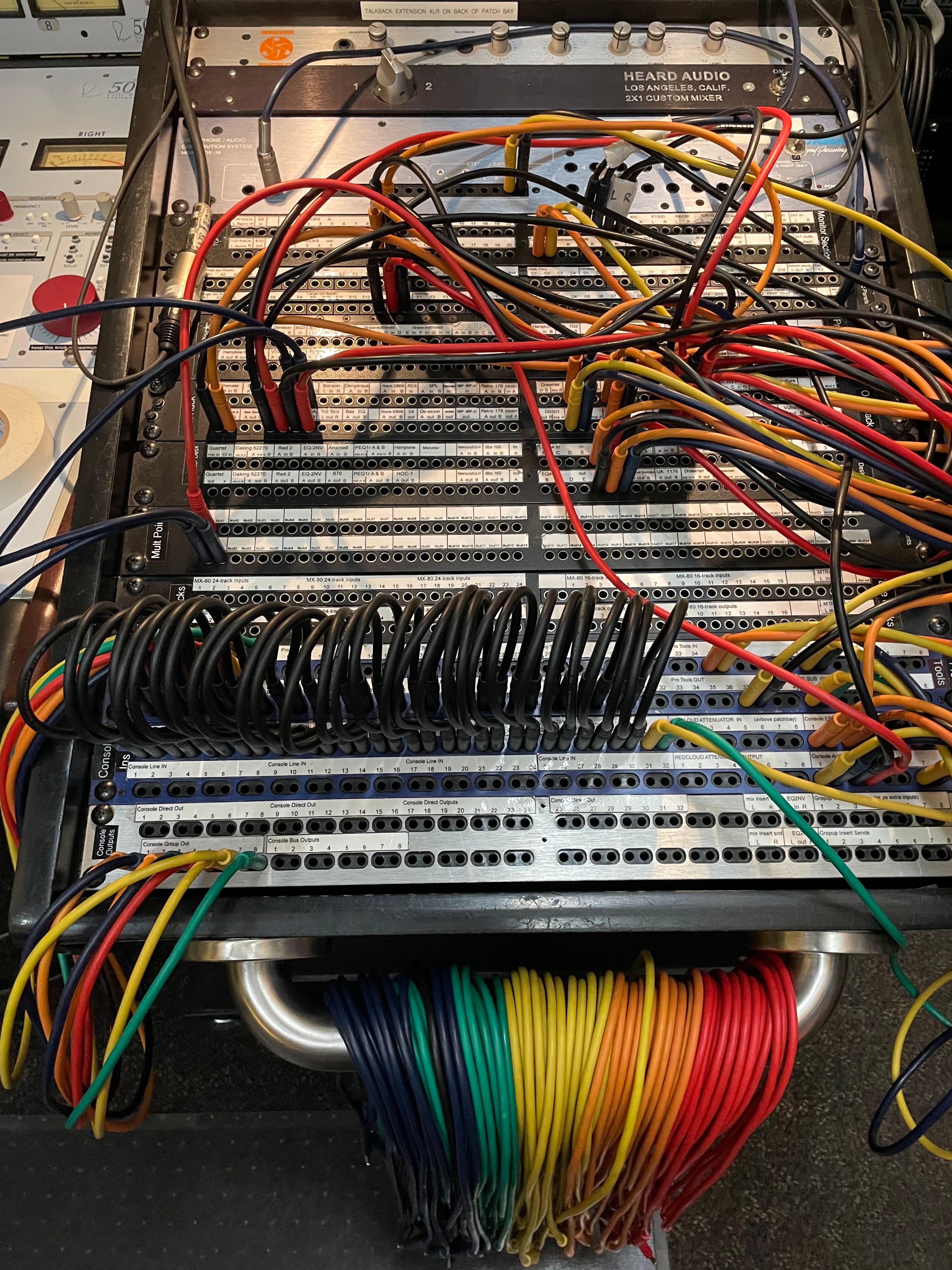
Almost everything in Jackpot! is wired into the patchbay via one of the nearly 1000 jacks. We can also send signals back out to the live room and isolation booths for headphone mixes. We can play an electric guitar in the control room and send it to an amp in another room. We can route signals to the plate reverb (see last week’s post) and bring the reverb sounds back into Pro Tools or the console. The mixing console is all wired up to the patchbay, and allows all sorts of routing options for tracking, monitoring, and mixing.
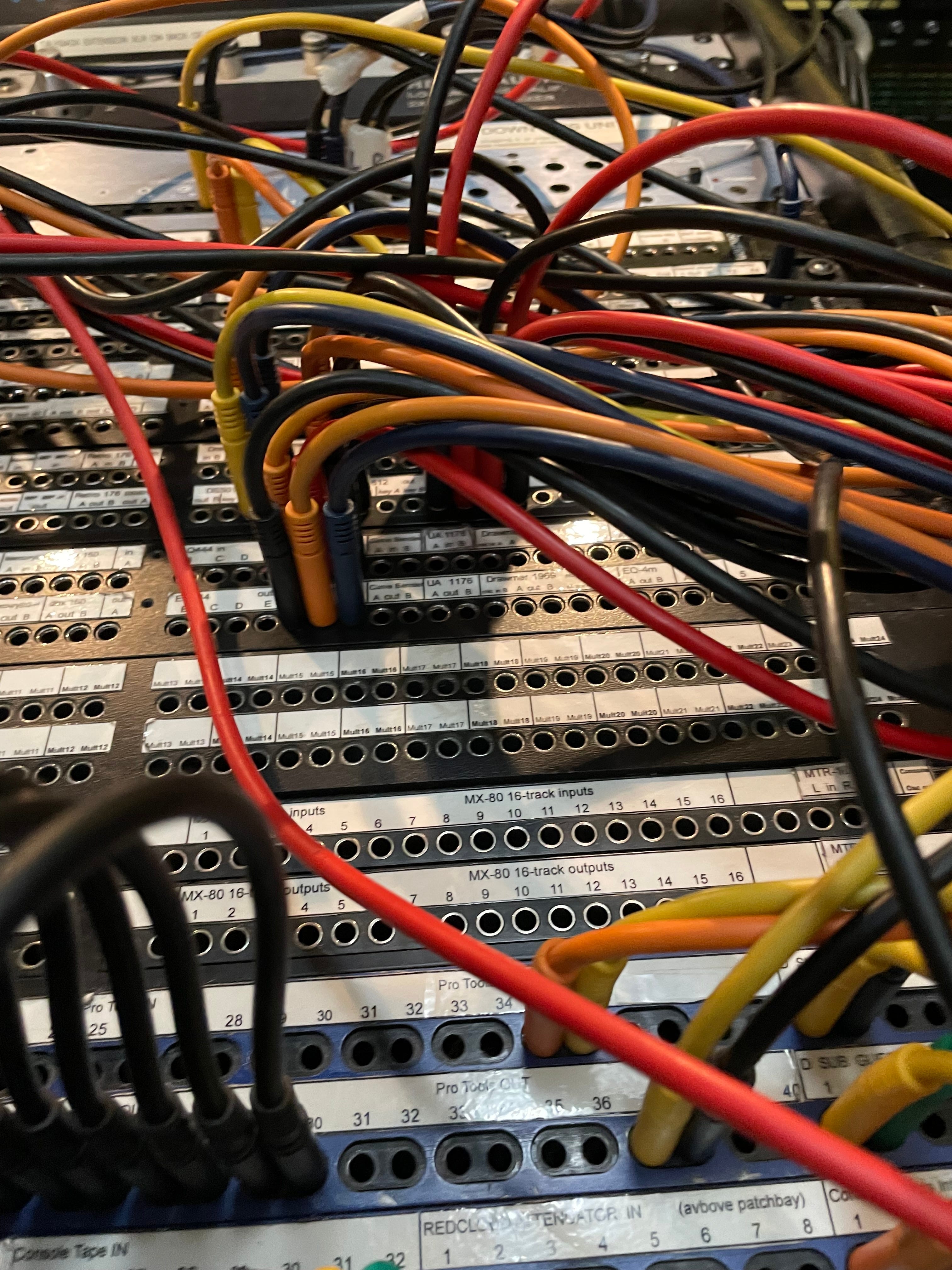
You can see Pro Tools and our Otari MX-80 16-track tape deck’s inputs and outputs above. We use Excel spreadsheets to print the patchbay labels onto cardstock, and then “laminate” with packing tape before cutting them out with a razor blade and metal ruler. It works!
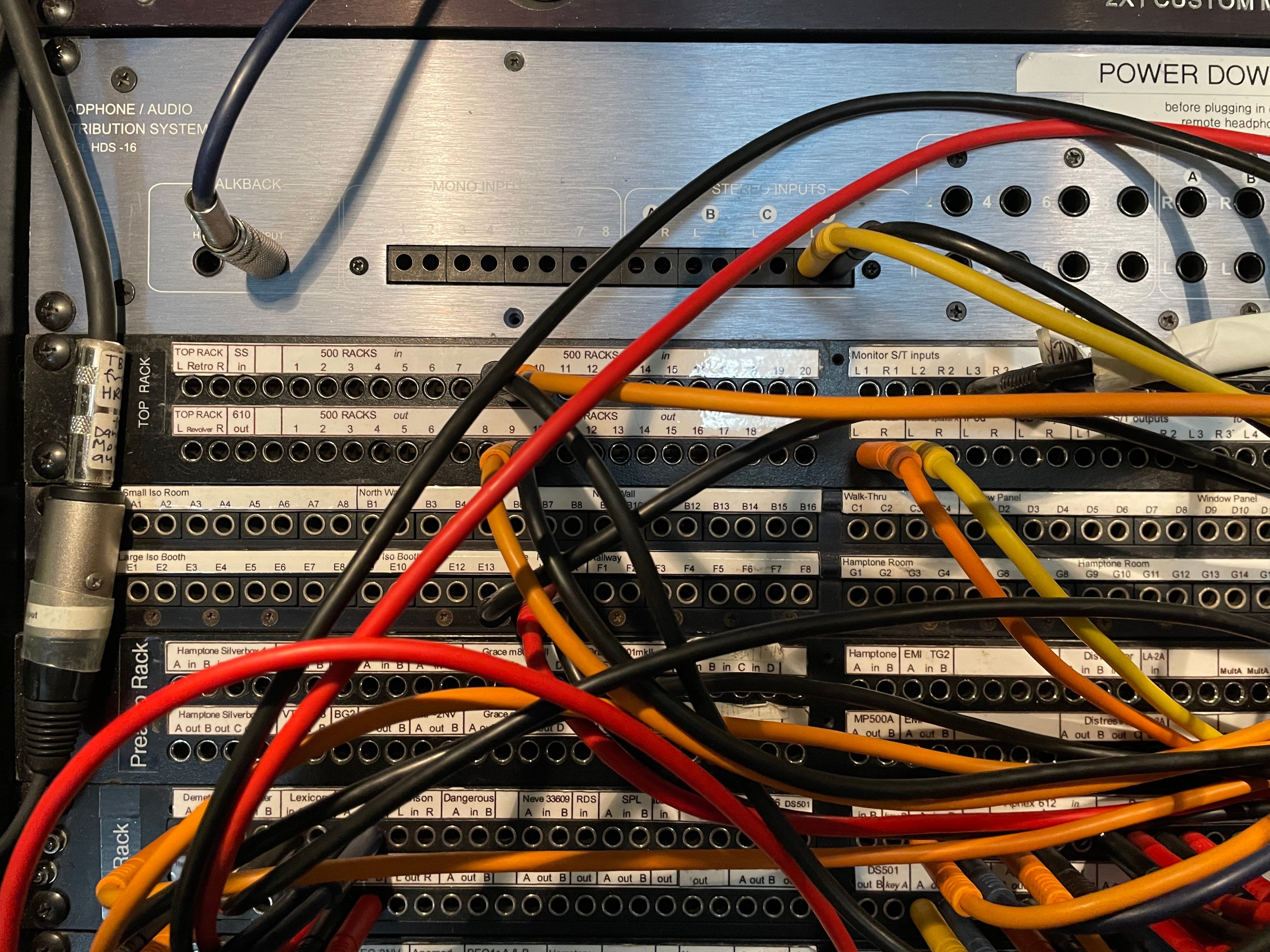
The blue box above the patchbay is the Furman HDS-16. This is the unit that feeds the little blue headphone mixers (Furman HRM-16) all over the studio. These allow musicians to hear the music during tracking and overdubs, and can be set up to allow the artist to create their own mix. Luckily the HDS-16 has TT input jacks on the front to patch into.
So yeah, patchbays make studio life easier and the one at Jackpot! gets used constantly on every session. It’s also laid out very logically, and visiting freelance engineers always tell us how easy this studio is to work in and route signals. And this efficiency leaves time for creativity and careful listening! -LC
Amazing stuff. Cabling is my ongoing challenge but I think a small patch is now in order! Your studio is amazing!