

Write It All Down!
Taking Notes in the Recording Studio is a Must-Do! -by Larry Crane

In Tape Op #96 I wrote an End Rant entitled “Getting Serious.” In that piece, I discussed the point in my life where I realized a big part of the recordists’ job is to take notes. Sometimes, lots of notes. At the end of a Jackpot! Recording Studio session recently, with the wonderful band Gouge Away tracking a single song (out soon) that I produced, engineered, and mixed, I noticed a pile of paper when we were done. It made me think of that End Rant, and so I took them home to scan so I could explain them. Comments are below each image.
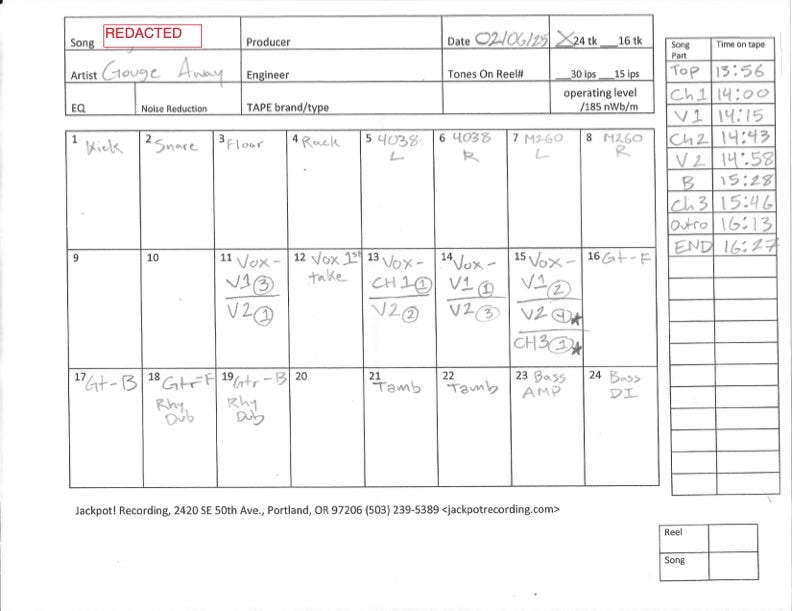
The session was tracked to 2-inch, 24-track tape (+6, 15 ips, no NR, IEC EQ) and then dumped into Pro Tools (24-bit, 96 kHz, wav) for some vocal comping, a few guitar overdubs, an experiment*, and an in-the-box mix. We were slightly under a time crunch, and mix revisions were a higher priority than a Rupert Neve Designs 5088 console mix. Above is the Track Sheet, indicating what instruments and such are on each track of the tape. Our helpful assistant, Doma Rocket, filled most of this out and did a ton of set up, tear down, and more. We used a (reusable) house reel and didn’t need to keep the Track Sheet in the reel case like you would if the band had bought tape and that was the master to mix from.
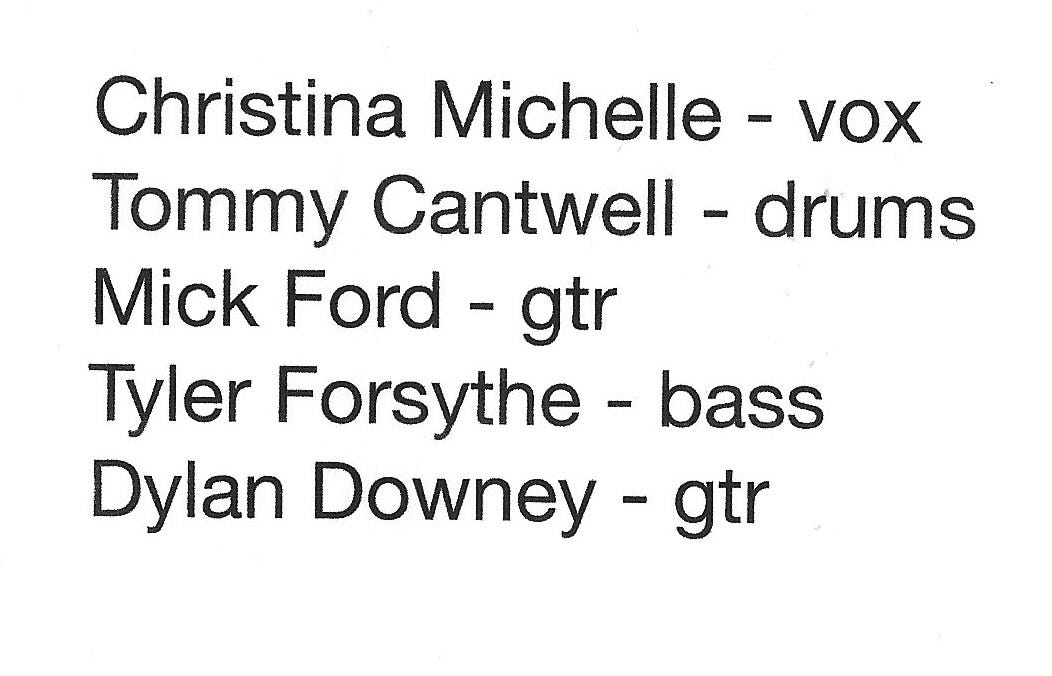
I had the band members’ names in my calendar app so I printed them out. Having names ready is a great idea for an engineer or producer (unless you didn't know that a band member had left or something like that). I’m still not quite sure which guitar player is whom, though I know I was told. I had a lot to do and forgot! I’m sorry guys! I will tell you that everyone was really nice and the song is great! (PS: Dylan isn’t even in the band anymore! Theo Hartlett was on guitar instead, and that added to my confusion!)
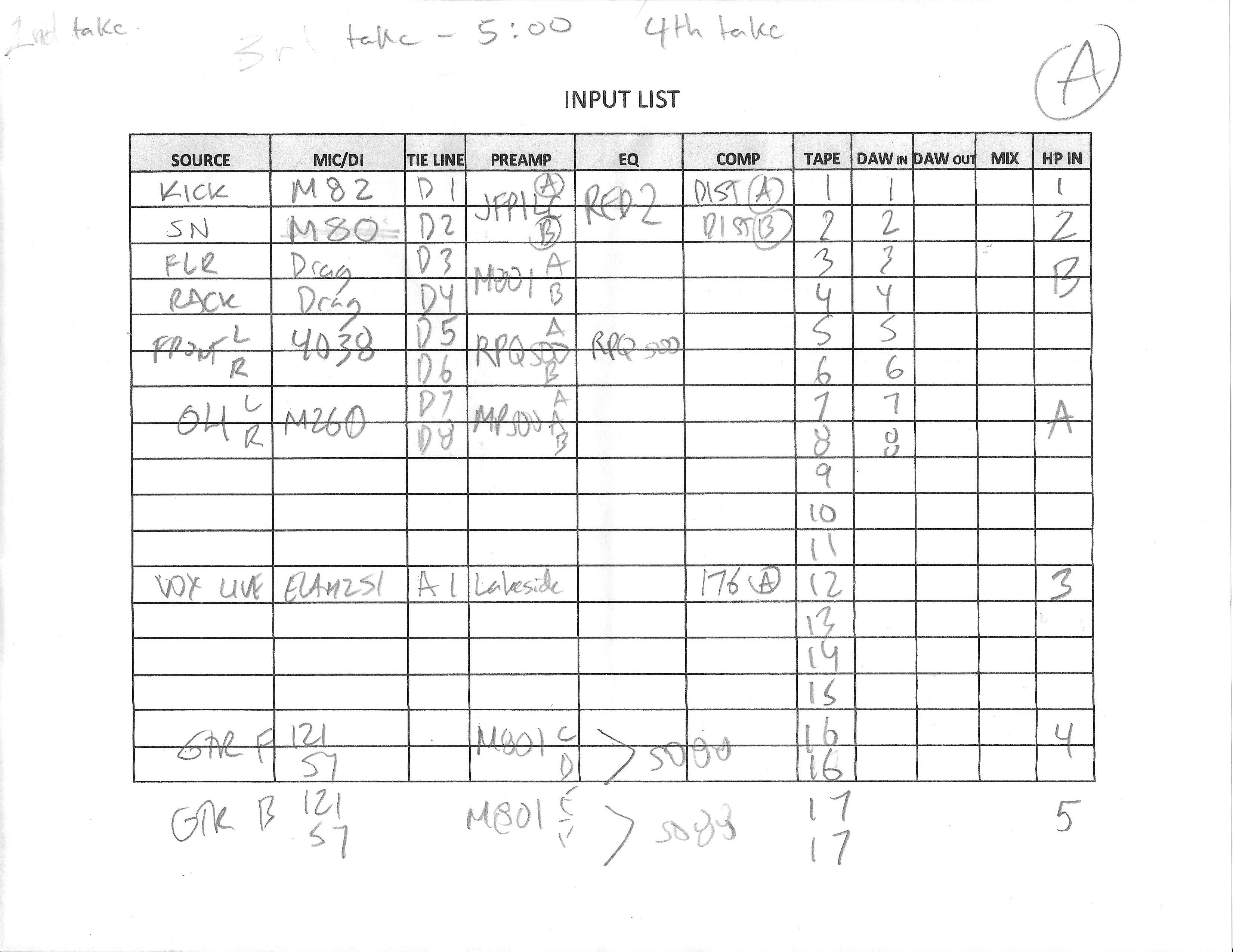
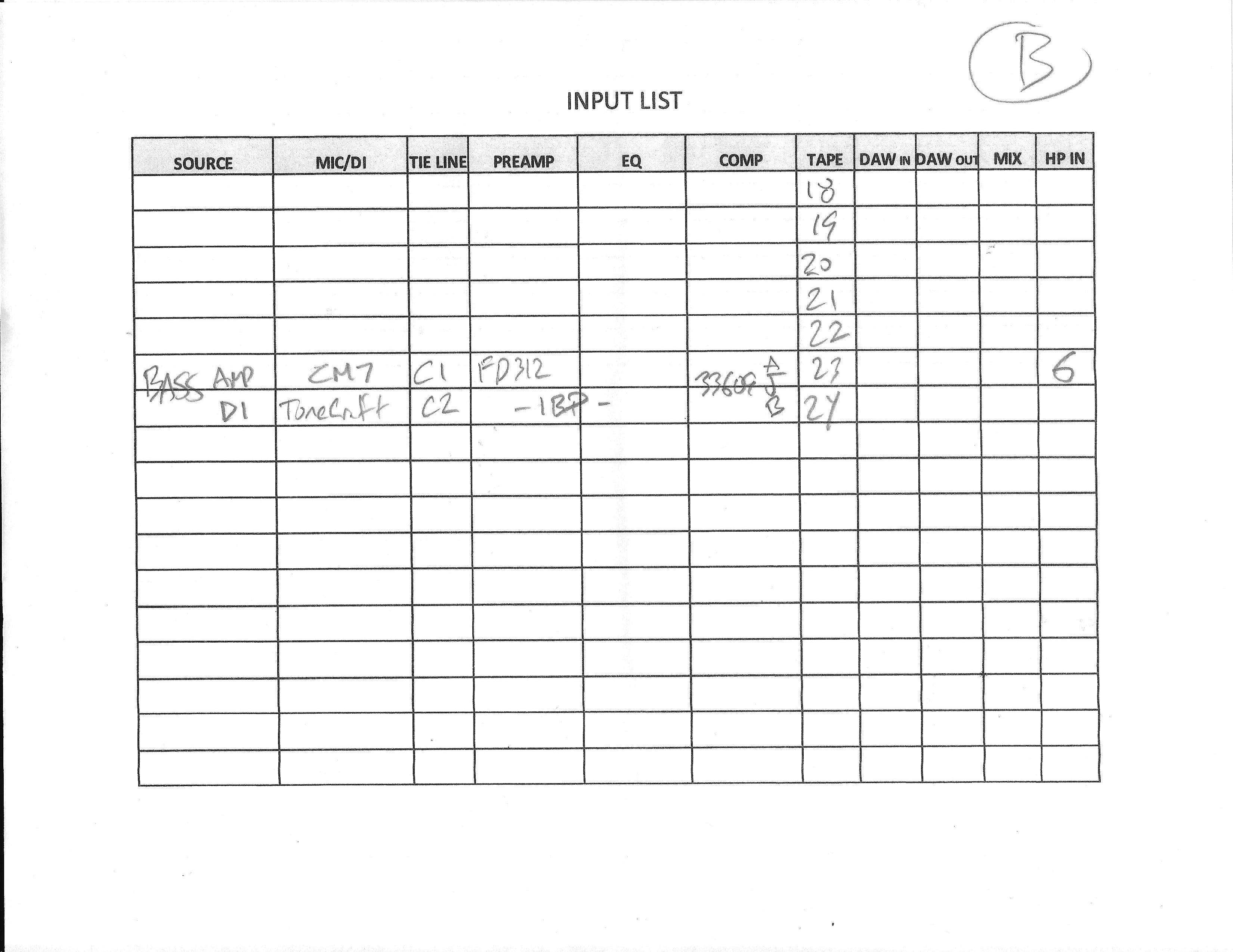
Here are the two Input Lists above. This was more important to me than the Track Sheet, as it mapped out signal paths for everything. Where you see 5088 on the guitar tracks that’s where I summed the two mics into single tracks while live recording. Get the sound and stick to it! If you’re wondering what some of the gear is, look at our studio’s Equipment list or buy Doma a big lunch and pick her brain.
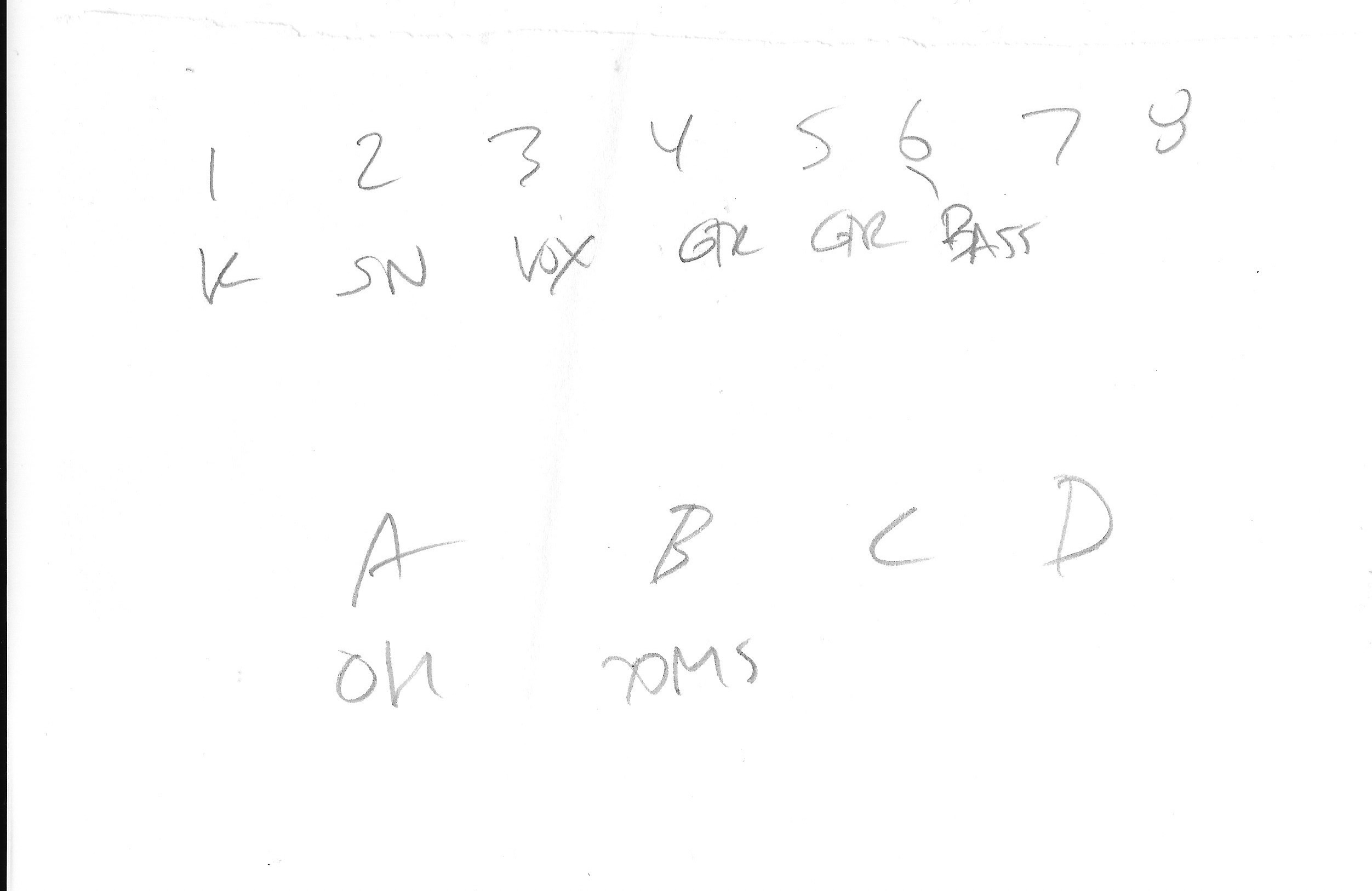
I bet this sheet above makes little sense to most people, unless they’re a regular Jackpot! engineer. It’s the audio channels that popped up on the Furman HRM-16 headphone mixers for the band to build their mixes with. If you forget to write up a little note like this, you’ll head into the live room and completely forget which channel has what. Doma ran in and labeled it all with console tape and Sharpie.
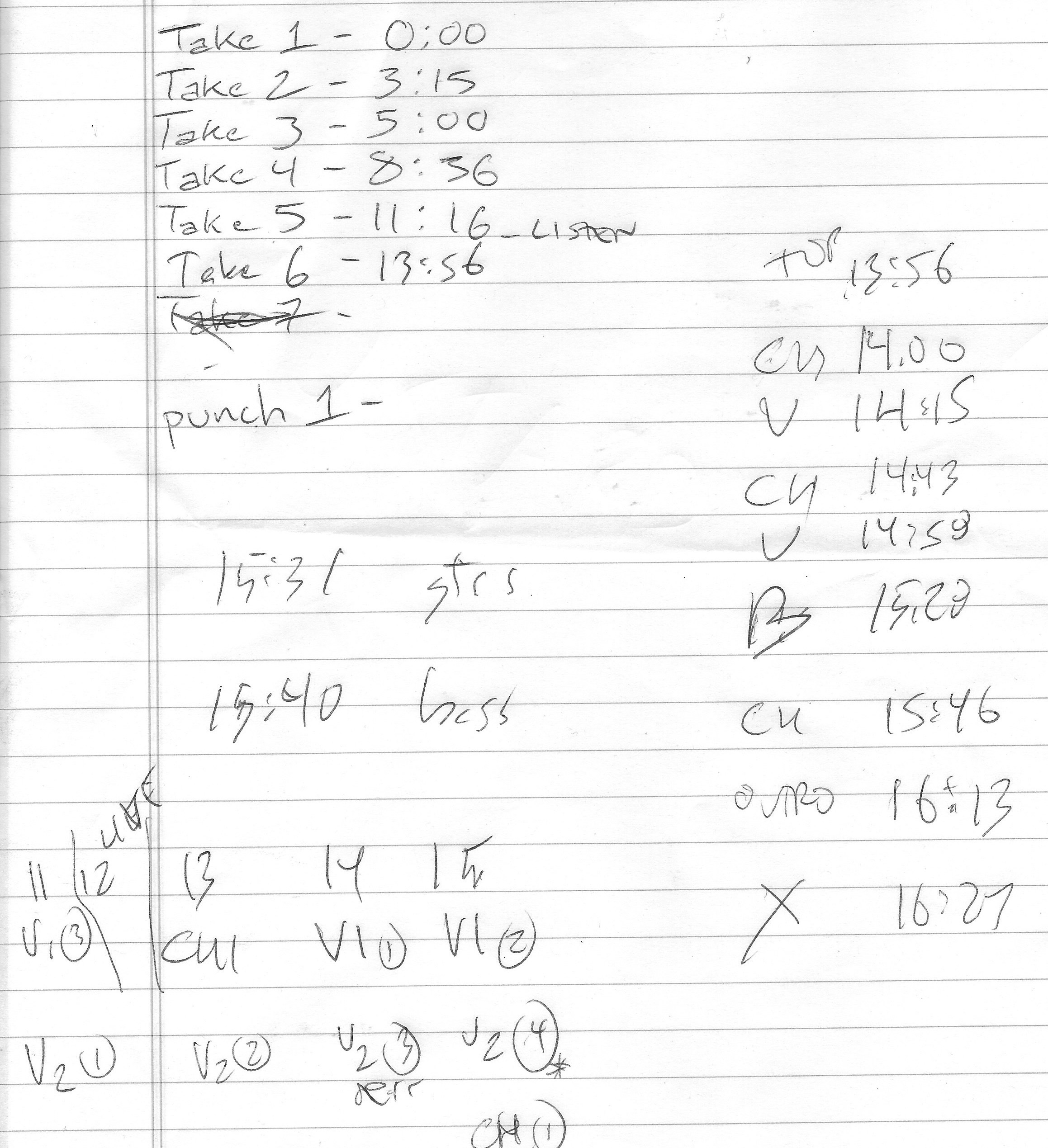
This final sheet above is from a general notes pad. Doma was tracking the times at the left top of where songs were on the reel for each take. I like to note “Listen” when we stop doing takes and the band comes in to listen back between takes. It makes for an easy communication when I can say, “The one we just listened to?” as opposed to, “Take 5?” I mapped out the song parts from the final, Take 6, on the right, and X marks the end or last downbeat. The “15:31 gtrs” and “15:40 bass” are where I noted to do (destructible) punch-ins on the live guitar and bass tracks. The bottom left corner notes what parts of the song we did Christina’s vocal overdubs for and on what tracks. Track 12 was the live vocal during basic tracking in our smaller (to-the-left) iso booth, and it carries chorus 2 in the final mix. Mixing wrapped up at my home studio, remotely, with just a few changes from the day-of mix. Easy.
Producing
I took a somewhat light approach on the producing end for this. The band was very well rehearsed, and the song structure was tight and condensed with no need to shorten or move parts of the song. The band knew what they wanted, and policed their own playing, so my producer’s job at that point was to double check that everything also sounded good to me (in time, in tune, proper tones, playing together well) and to plan for overdubs and vocal approach. The funny thing was when the guitar players and I had the same exact idea for the end Outro chord overdubs. An easy sell! I focused on Christina’s vocals, especially on the quiet verses where the singing was softer. She can belt the shit out of the loud parts, I’ll tell you that! I think we achieved a great balance of wild energy and controlled presentation, if that makes any sense. A lot of their previous records were done with Jack Shirley (Tape Op interview here), and they sound really good for a heavier, dynamic band like this. I think I got a similar vibe here, but kind of different from Jack. But man, it was fast and fun!
*Regarding the experiment: Tommy saw our array of Moog Moogerfooger pedals, and wanted to try something on his drums at the bridge. We used the 12 Stage Phaser pedal, processing the left and right front of kit Coles 4038 mics in two passes at slightly different sweep rates. It was kinda interesting, but the band decided it wasn’t needed. That’s always fine by me. I learned a long time ago that ideas like this might work, might not work, or get vetoed by the artist. Usually it’s because the experiment is something new or they are not necessary. I think both in this case!
Fascinating! Reading an input list is studio forensics 101. Oh, they used this mic on that through that preamp. Hmm…Coles on stereo drum room mics. Please, if possible post a link to the release so we can hear the final.